Homeowners managing crawlspace moisture and seasonal insect migration rely on targeted pest control services Nashville programs to protect structural integrity and indoor air quality. SilverFern Bug Services provides low-impact biological barriers and physical structural exclusion tailored for suburban Davidson County properties.
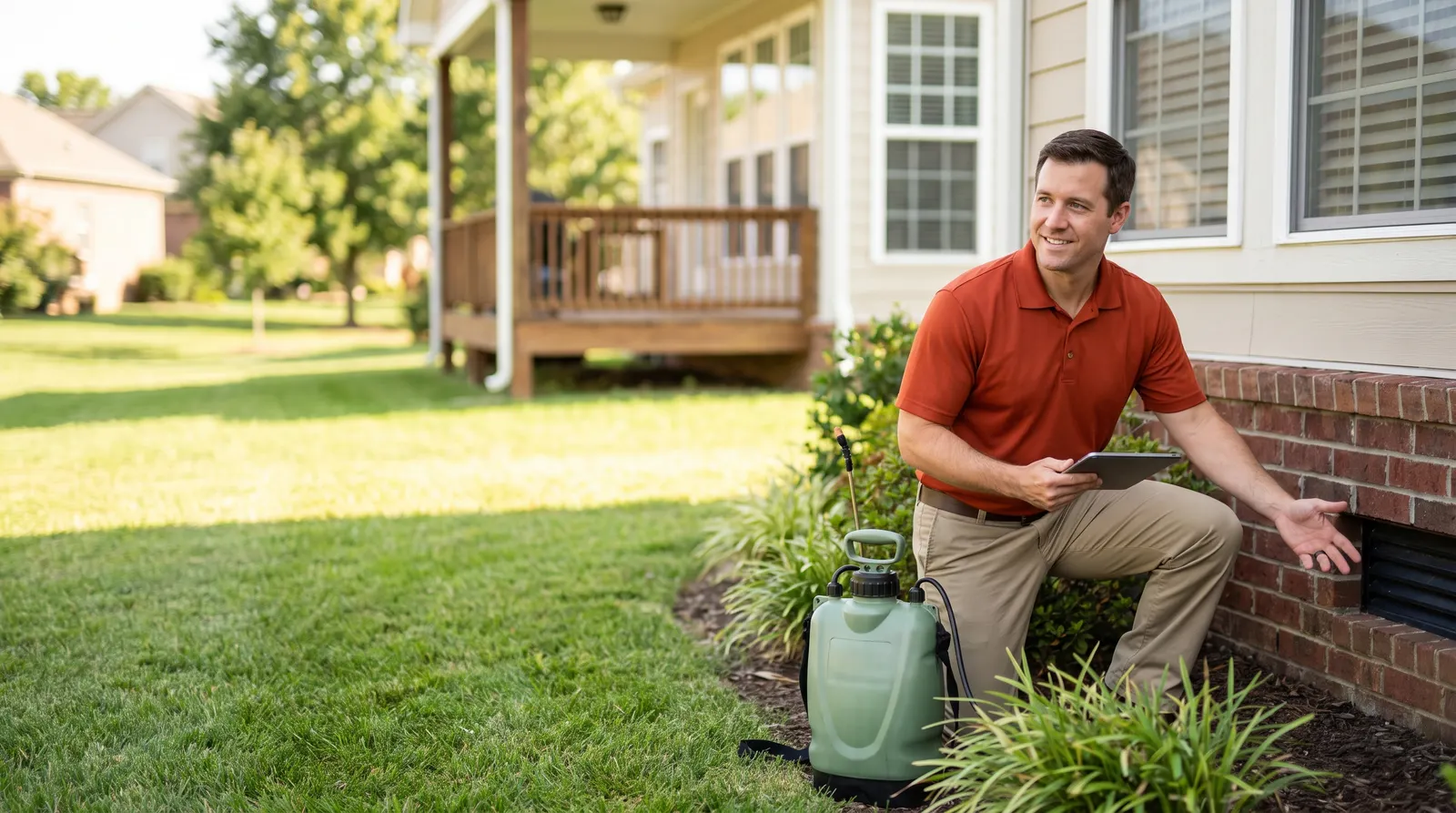
A pest control services company in Nashville is an integrated biological management firm that identifies, excludes, and eliminates structural wood-destroying insects, arachnids, and vertebrate vectors across residential properties.
Every service reflects the same meticulous attention to detail, whether it's a single job or a larger pest control services project across Nashville.
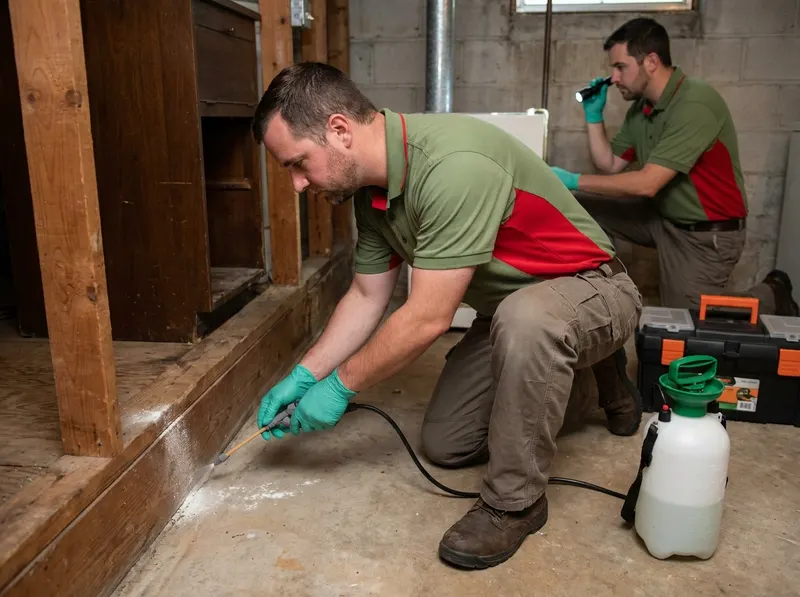
Brown recluse spiders (Loxosceles reclusa) thrive inside the subflooring, attics, and drywall cavities of older and modern Nashville homes alike. Effective management avoids generic liquid surface spraying, which can agitate spider populations and drive them outward onto beds, baseboards, and children's play areas. Instead, technicians systematically install high-tack monitoring boards, inject micro-polymeric dusts into structural wall voids, and install physical door sweeps along garage entries. Dehumidification guidance for crawlspaces reduces baseline prey insect populations, disrupting the arachnids' primary food source. Treatments follow standards established by the University of Kentucky Department of Entomology for persistent recluse management.
Get a quote →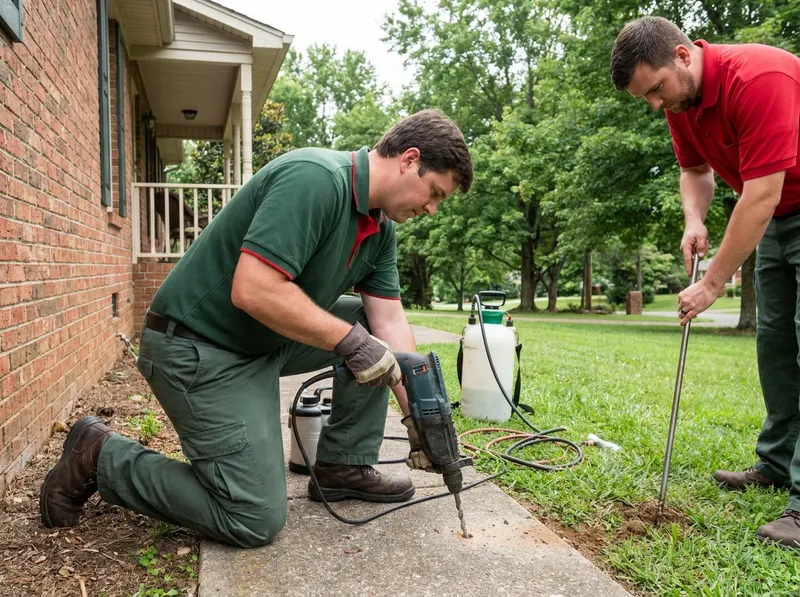
Eastern subterranean termites (Reticulitermes flavipes) cause severe structural timber damage throughout Middle Tennessee's humid climate. Technicians conduct complete foundation diagnostics to locate mud shelter tubes along crawlspace piers and exterior block foundations. Barrier installations employ non-repellent liquid termiticides, such as fipronil, applied into trench lines at label rates specified by the EPA Office of Pesticide Programs , preventing structural compromises to wood subfloors. Comprehensive bait monitoring arrays placed at ten-foot perimeter intervals intercept foraging colonies before they access structural mudsills and band boards.
Get a quote →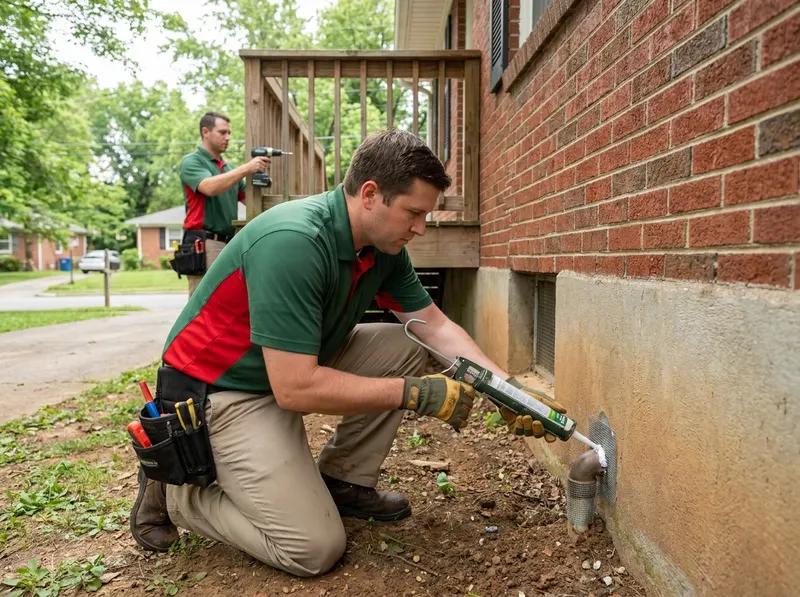
Norway rats and house mice exploit gaps in foundation vents, roofline soffits, and utility penetrations to enter warm crawlspaces and attic decking during autumn cooling. Technicians deploy durable mechanical materials, including 19-gauge hot-dipped galvanized hardware cloth and copper mesh, to seal all external openings larger than one-quarter inch. Interior recovery relies on strategic snap-trap runs within non-living utility spaces, avoiding secondary poisoning hazards to household domestic dogs and cats. Guidelines outlined by the Centers for Disease Control and Prevention guide our physical structural sealing protocols.
Get a quote →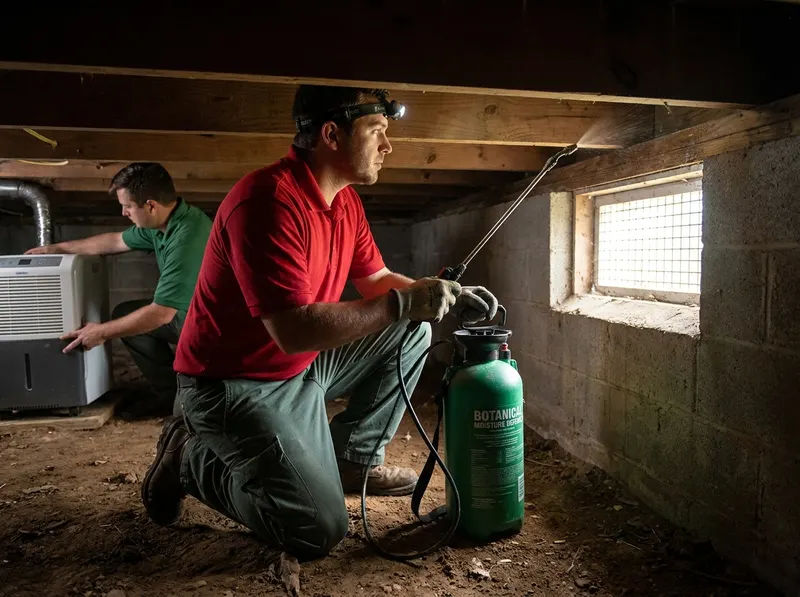
High relative crawlspace humidity across Davidson County drives fungal rot, silverfish infestations, and wood-boring beetle reproduction. Technicians install heavy 10-mil to 20-mil polyethylene vapor barriers over exposed red clay dirt, securing overlap seams with heavy vapor tape. Foundation vents are inspected for screening integrity, and low-toxicity botanical dusts derived from thyme oil and phenethyl propionate are applied around rim joists to deter wood-destroying pests. Moisture mitigation aligns with foundational building performance standards curated by the U.S. Department of Energy .
Get a quote →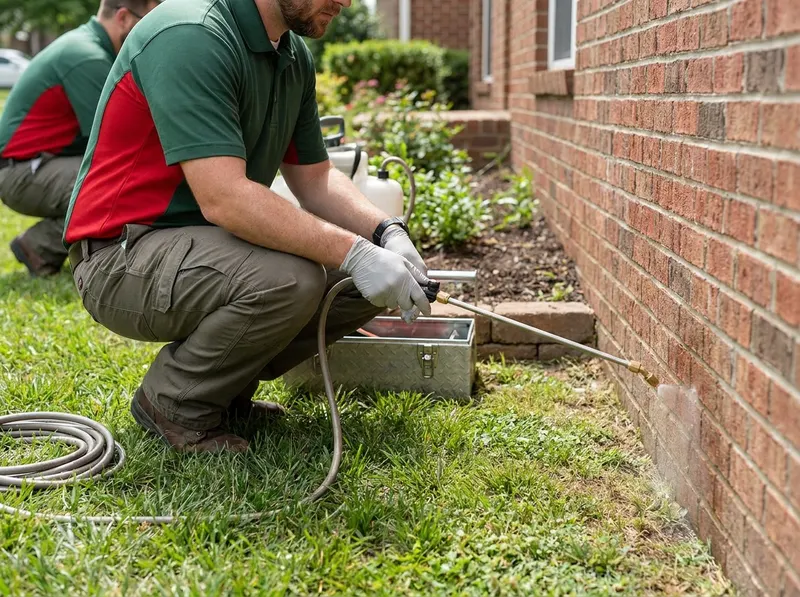
Odorous house ants and carpenter ants establish foraging trails into kitchen spaces through slab expansion joints, weep screeds, and window trim. Rather than broadcasting persistent repellent pesticides across perimeter soil beds, technicians establish target-specific gel baits containing slow-acting biological disruptors. Foraging worker ants transport active components directly back to the subterranean queen, terminating the reproductive nucleus of the colony. Foundation borders receive a three-foot perimeter application using naturally derived essential oil compounds, compliant with organic production guidelines defined by the Organic Materials Review Institute .
Get a quote →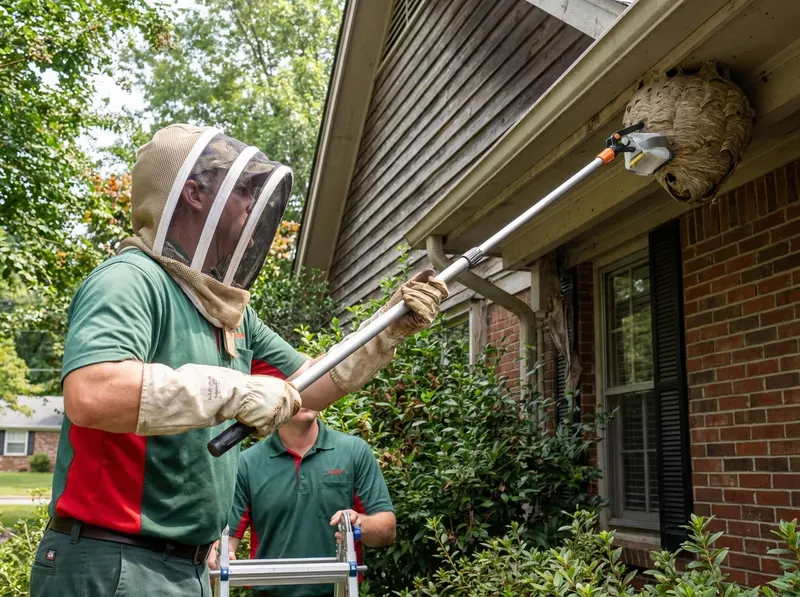
Paper wasps, bald-faced hornets, and yellowjackets build nests beneath soffit overhangs, porch ceilings, and landscape retaining walls, posing acute sting risks to children and outdoor pets. Technicians physically remove nests using telescoping mechanical equipment and target void-dwelling colonies with localized pyrethrin aerosol formulations that rapidly break down without lingering environmental residues. Soil-nesting yellowjackets are treated directly at entrance points under dawn or dusk conditions when worker foraging ceases, aligning with pollinator protection best practices issued by the Pollinator Partnership .
Get a quote →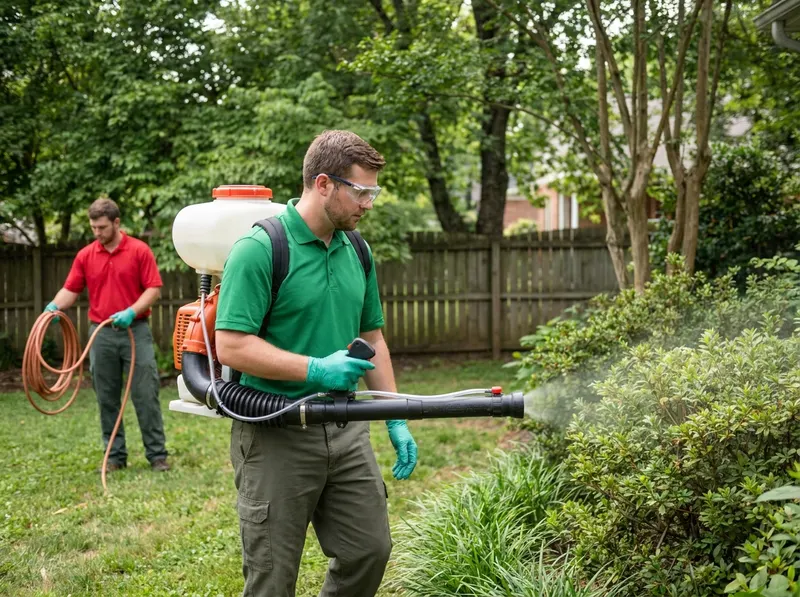
Sustained summer rainfall and humidity along the Cumberland River basin foster aggressive populations of Asian tiger mosquitoes (Aedes albopictus). Field specialists perform source-reduction walks, clearing standing water collected in gutter runs, plant trays, and landscape hollows, followed by the direct application of biological insect growth regulators like Bacillus thuringiensis israelensis (BTI) to retention areas. Shaded perimeter foliage receives micro-droplet mist applications of botanical or micro-encapsulated formulations that bond to leaf undersides without running off into storm drains, supporting civic insect management standards overseen by the Tennessee Department of Agriculture .
Get a quote →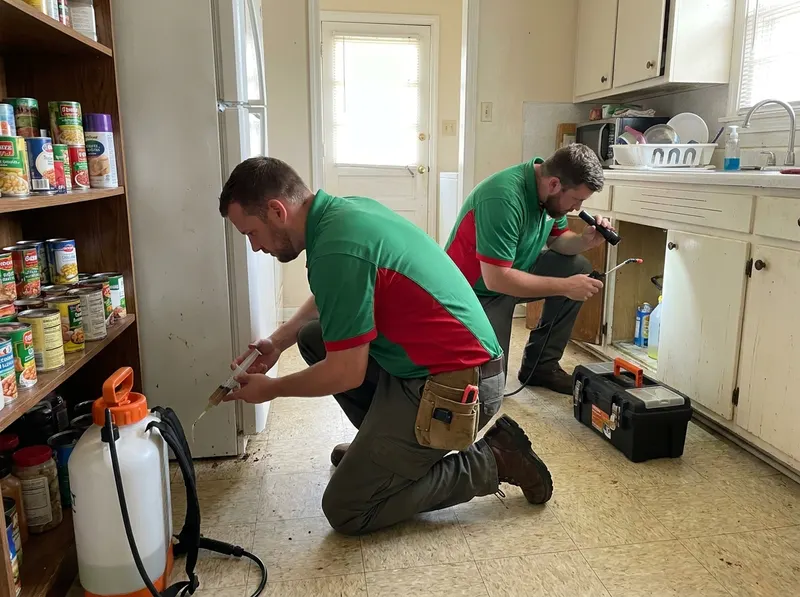
German cockroaches inside residential kitchens and American cockroaches emerging from municipal stormwater drains demand multi-tiered cleanouts. Interventions combine non-toxic high-efficiency particulate air (HEPA) vacuum extraction of active clusters, targeted insect growth regulators (IGRs) that disrupt molting cycles, and bait matrices placed behind refrigeration motor housings and cabinet hinges. This structural technique avoids broad aerosol foggers, which contaminate food preparation surfaces and drive roaches deeper into wall cavities, adhering to healthy housing protocols from the U.S. Department of Housing and Urban Development .
Get a quote →You get a firm, itemized quote for your pest control services before any work begins, no surprises, no pressure.
Careful prep, tidy work, and a full cleanup when we are done. We treat your home and belongings like our own.
The same trusted, background-checked team from the first call to the final check.
Selecting residential pest intervention depends on the specific target organism, life-cycle stage, and structural vulnerability of the dwelling. If an active infestation of wood-destroying subterranean termites threatens foundation sill plates or floor joists, localized soil-barrier injections and exterior bait matrices offer structural defense. If nocturnal scratching indicates commensal rodents in attic insulation, physical entry sealing paired with targeted indoor trapping resolves the colony without non-target chemical exposure.
When homeowners encounter brown recluse spiders in living areas or near baseboards, localized void micro-dusting and humidity reduction provide direct control, whereas broad-spectrum liquid sprays often scatter the arachnids deeper into wall voids. The trade-off centers on intervention scope: broad surface applications require lower initial labor but fail to resolve nesting pockets, while mechanical exclusion and void treatments demand detailed architectural sealing to deliver long-term protection without ongoing interior pesticide residues.
Every project gets a firm, written price after a free on-site visit. Ranges below for orientation.
Tell us about your pest control services job and we'll send a clear, written quote, usually the same day. Or just call and talk to a real Nashville pro.
(615) 537-0360
Properties near limestone formations around Radnor Lake State Park and the shaded riparian zones flanking Shelby Bottoms Greenway experience distinct biological pressures, ranging from severe brown recluse migrations to subterranean termite activity driven by high seasonal water tables. Historic structures in Germantown, East Nashville, and Sylvan Park often feature stone foundation walls, open crawlspace vents, and original tongue-and-groove hardwood subfloors that provide direct structural entry routes for rodents and insects when seasonal temperatures drop along the Cumberland River corridor. In contrast, slab-on-grade homes throughout Antioch and The Nations commonly experience weep-hole ant trails and plumbing chase intrusions, requiring non-invasive physical barriers rather than standard synthetic liquid saturations.
Free estimates for Nashville & the surrounding area.
For standards, safe disposal, and service guidance on pest control services in Nashville, TN, useful references include U.S. EPA, ENERGY STAR, U.S. Dept. of Energy, Consumer.gov, U.S. Census Bureau, and Google Maps. General consumer and small-business resources are available from USA.gov, Better Business Bureau, FTC Consumer Advice, U.S. Small Business Administration, and Ready.gov.
 SilverFern Bug Services